Stefanie Yeo · · 5 min read
This newly launched startup is tackling preventive healthcare in Indonesia

The Covid-19 pandemic has changed the day-to-day lives of many Indonesians. In tandem with the rising wave of digitalization in the archipelago, the pandemic has reshaped how Indonesians eat, pay, shop, work, and even how they think about their health.
Healthtech startups in Indonesia have experienced significant growth as a result of the outbreak, with telemedicine platforms like Alodokter and Halodoc seeing app downloads and user numbers skyrocket over the last year.
However, while these platforms make up the “cure” side of the healthcare sector, there is a dearth of services that take on the “prevention” part of the equation.
“Although global and macro trends have been shifting toward ‘preventive’ healthcare, healthtech [in Indonesia] has yet to focus on driving healthier lifestyles,” says Reynazran Royono, CEO of health and fitness app Fita. “However, Indonesians are becoming more aware about the importance of being healthy, and that’s been boosted because of the Covid-19 situation.”
By Indonesians, for Indonesians
Fita aims to plug this gap in the healthtech space. The newly launched startup was built as part of telecommunications major Telkomsel’s digital innovation strategy, which aims to empower Indonesian society in the digital realm, beyond connectivity services.
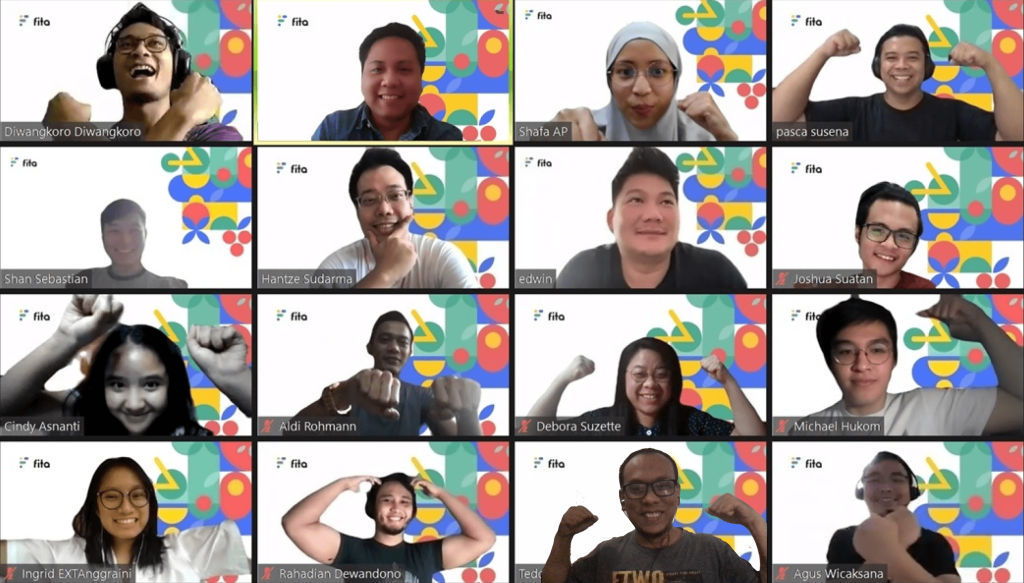
The Fita team / Photo credit: Fita
To that end, Fita was founded with one simple goal in mind: helping Indonesians live happier, healthier lives. This endeavor was buoyed by the Indonesian government’s focus on encouraging healthier living, which has become crucial as obesity rates climb and concerns deepen over other health issues in the country.
“The key idea is to have programs that help Indonesians create healthy habits and be conscious of those habits,” explains Ronald Veryu, Fita’s chief product officer.
Fita’s platform offers users customized programs to help guide them on the journey toward a healthier life. When users first download the app, all they need to do is fill in a simple questionnaire on their habits and health goals. Fita uses this information to develop a fitness or wellness program that suits each user.
The app can track meals and water intake, count steps, and keep tabs on exercise routines. It also offers fitness and wellness videos, recipes, meal planning tips, and guidance from its team of coaches and health experts who help build the routines available on the platform.
While certain features of Fita’s platform don’t differ significantly from other players in the space – like MyFitnessPal’s meal tracking feature or Fitbit’s activity tracking and fitness plans – Fita prides itself on providing an end-to-end experience with one key difference: a local touch.
“Our programs are handcrafted for Indonesians, from Indonesian coaches who have worked with local clients and know what their needs are,” says Veryu. Logging meals, for instance, is easier because the app recognizes local dishes, and Fita has meal plans that cater to Indonesian tastes as well, he says.
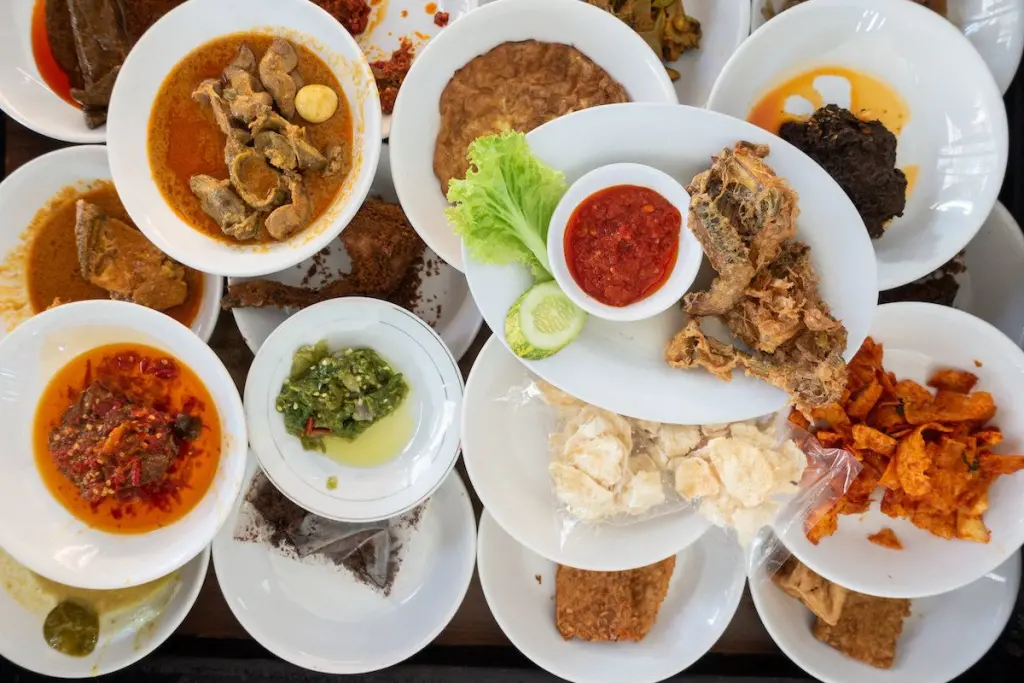
Photo credit: imagesbyhafizismail / 123RF
The app also offers health and wellness programs featuring notable Indonesian influencers such as bodybuilder Ade Rai and television host and actress Melanie Putria. Additionally, its community feature allows users to connect with and encourage each other on their respective health journeys.
According to Royono, such localized content is the key to getting Indonesians onto the platform and helping them stick with it in order to cultivate healthy habits.
“It’s about making sure the users feel at home, and having that very local focus,” he adds.
A constant work in progress
After months of extensive product development and testing, Fita has finally launched its app. The firm also has a head start: it already has over 40,000 users, which it acquired during its beta testing phase, thanks to Telkomsel’s large network. With the platform now up and running, that number is set to grow even further.
However, Fita underwent several iterations before it reached its current form, and finding the right product-market fit for the platform was especially challenging, says Royono.
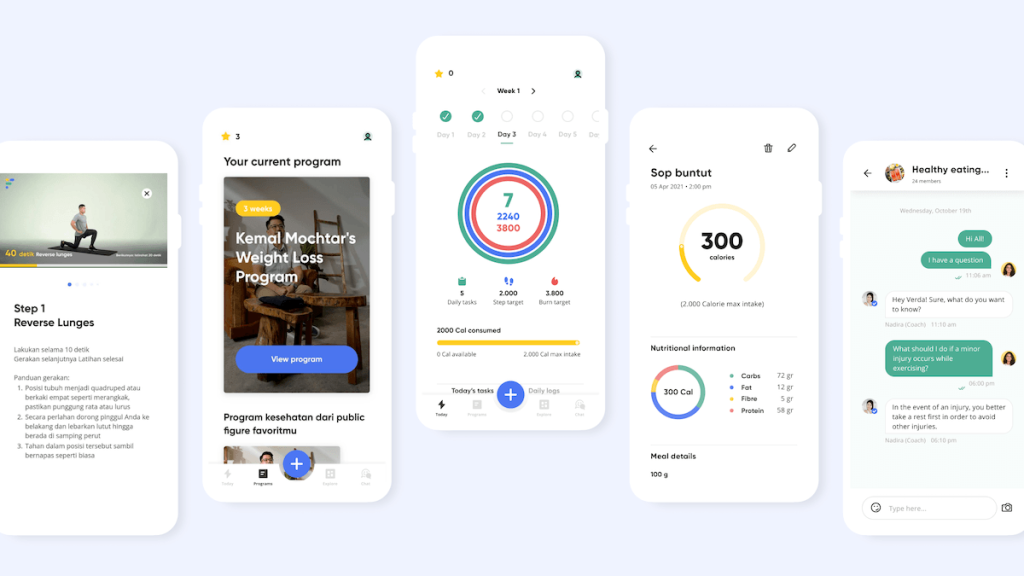
Photo credit: Fita
“The initial segment we wanted to target was housewives, as they aspire to live healthier and help their families be healthier,” he explains. “However, as we continued with testing, we realized that the people signing up for Fita were not just housewives.”
The team had to go back and rework the way the platform and programs were designed in order to serve this broader customer base. This realignment involved understanding who its users really were and figuring out how to develop a range of programs and services that meet user needs in a scalable manner.
“What’s important is to ensure that the program is consistent across individuals, and utilize key differentiators such as height, weight, and age effectively to customize these programs,” says Royono.
For Veryu, this entailed wide-ranging user interviews and surveys in order to pin down what customers were looking for in the app and how it could help address the challenges they faced on the path to leading healthier lives.
The app will be a constant work in progress as the team continues to provide new and improved services to users, according to Veryu.
“Our users are dynamic, and Fita is dynamic,” he says. “We will keep iterating [the app] to understand their problems and meet their needs.”
To a healthier Indonesia
Fita’s public launch is just the beginning of its journey toward helping Indonesians live healthier. The plan is to roll out new features later in the year, including gamification and rewards to help drive up user stickiness and an enhanced push notification system to encourage habit formation.
In the longer term, Royono wants to see Fita expand into other areas, such as teleconsultations and ecommerce.
“Instead of consulting doctors like you do on telehealth platforms, users can consult with fitness coaches,” he explains. “We could sell supplements or partner with fitness wearables to enhance our services.”
The firm also plans to explore new technology such as artificial intelligence-powered photo recognition that can help make Fita’s platform easier to use. For example, if a user could log a meal just by taking a photo of it, they would be encouraged to track their meals more regularly, giving the company more accurate data to work with.
Ultimately, Fita wants to be the health and fitness app for Indonesians.
“We want Fita to become a habit for Indonesians,” says Veryu. “When you look at your phone in the morning, you look at Instagram, you look at TikTok, you look at Fita.”
Fita is a health and fitness app that empowers Indonesians to live healthy, happy lives and achieve their health goals by building good habits.
Download Fita via its website here.
This content was produced by Tech in Asia Studios, which connects brands with Asia’s tech community. Learn more about partnering with Tech in Asia Studios.
Stay updated on the go with our mobile app.
Get latest insights with smoother, more personalized experience through TIA mobile app.
Recommended reads
 Life’s a game, and AI agents are Animoca’s new play
 Indonesian AI startup goes global
 Forrest Li on scaling Sea, building smarter bots, and founder grit
 An AI assistant that joins sales calls and scores team skills
 Beyond the check: Why VCs need more than capital
 SGX’s CEO says it doesn’t need a unicorn to win
 SMEs want AI too, but not the kind Big Tech is selling
 Oatside’s alt-milk rise hits a profitable gear
 Alibaba’s financial health in 12 charts
 Asia’s telcos bundle AI into mobile plans. Will it pay off?





Editing by Nathaniel Fetalvero, Arpit Nayak, and Jaclyn Tiu
(And yes, we’re serious about ethics and transparency. More information here.)