C. Custer · · 4 min read
China’s World Internet Conference is a sham, and foreign execs who went should be embarrassed
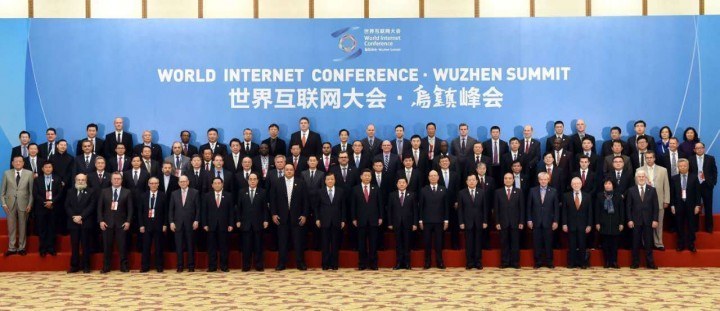
If you want to know what’s happening at China’s “World Internet Conference” in Wuzhen and what China plans for the internet, look no further than the speech of Wikipedia founder Jimmy Wales. Wales participated in a panel earlier in the week, during which he said that advances in machine translation might someday make it impossible for governments to control the flow of information on the web.
But when the transcript of that event appeared on the conference’s website on Thursday, Wales’s remarks had been changed. Instead of suggesting that governments wouldn’t be able to control information, he was quoted as having said that the developments will help governments analyze communication.
That kind of censorship is about par for the course at a so-called “World” Internet Conference that is actually a propaganda move aimed at promoting China’s concept of “internet sovereignty.” Internet sovereignty is the idea that nations should control access to and content on the internet within their own territory; it’s important to China because the government wants to ensure it can continue to censoring the web. And while that ideology is promoted at the World Internet Conference, China is also pushing to enshrine it as policy in the U.N., where it just won a significant victory: the inclusion of a term in a planning document that enshrines state control over the web. (Although it wasn’t a total victory; the final document also includes phrases like “freedom of expression” and “democracy” that China sought to remove).
But if the U.N. document represents what China can actually get the world to agree to, the World Internet Conference is a window into what it truly wants. And for the advocates of a free internet, the view is quite chilling – especially when you look at who was in attendance.

What are you doing here?
China ranks dead last in global internet freedoms (although to be fair, North Korea wasn’t included in the survey), and the World Internet Conference has been an ironic mix of pronouncements about the value of internet freedom and the need for internet control, coming from the same Chinese officials who are currently engaged in criminally trying Beijing lawyer Pu Zhiqiang over seven tweets. But China’s government keeping a tight grip on the internet and trying to present that control as a good thing is not surprising.
What is surprising is how many people appear to be listening, and apparently participating, in the propaganda event. Executives from Microsoft, IBM, Apple, and LinkedIn were in attendance, and the CEOs of Netflix and Airbnb spoke at the event, as did the aforementioned Jimmy Wales and executives from Facebook, Sequoia Capital, and more.
These lustrous attendees have been treated to uncensored internet access during their stay in Wuzhen, to ensure they don’t have to experience what browsing the web under China’s “internet sovereignty” is actually like. And of course, media coverage of the event has also been controlled. The New York Times (whose site was blocked in China after reporting on the hidden wealth of China’s then-premier Wen Jiabao in 2012) and the Washington Post were denied access to the event altogether, as were some European media outlets.
The World Internet Conference is China putting on a show for the world, trying to paint its tightfisted control of the internet in a positive light. One can’t blame any of the Chinese executives in attendance for being there, but foreign tech companies should be ashamed for participating in this sham even as Beijing looks ready to send a lawyer to prison for nearly a decade over a few critical tweets.
There’s nothing wrong with attempting to engage with Chinese officials, or looking hard at the Chinese market. But foreign companies should know better than to attempt to do so at an event like this. Every foreign company that participates in events like this lends legitimacy to the propaganda and helps promote China’s vision of a walled-off, tightly-controlled internet. By attending and participating, they’re allowing themselves to be seen as tacitly endorsing Beijing’s policies.
And as Mr. Wales learned on Thursday, even if you attend with the intent speak out, at an event like this, that doesn’t matter. If you don’t stick to the script, China will simply rewrite what you said and push that message out to the masses.
China’s World Internet Conference is neither a conference nor is it about the world. At a conference, there is discussion and debate; at the World Internet Conference there is a pre-approved overarching propaganda message. At a world event, perspectives from across the globe are represented; at the World Internet Conference China’s perspective reigned supreme and those who went off-message found themselves censored.





Stay updated on the go with our mobile app.
Get latest insights with smoother, more personalized experience through TIA mobile app.