 Kylee McIntyre · · 4 min read
80% of the world’s blindness is preventable. This hardware is fighting it in 26 countries
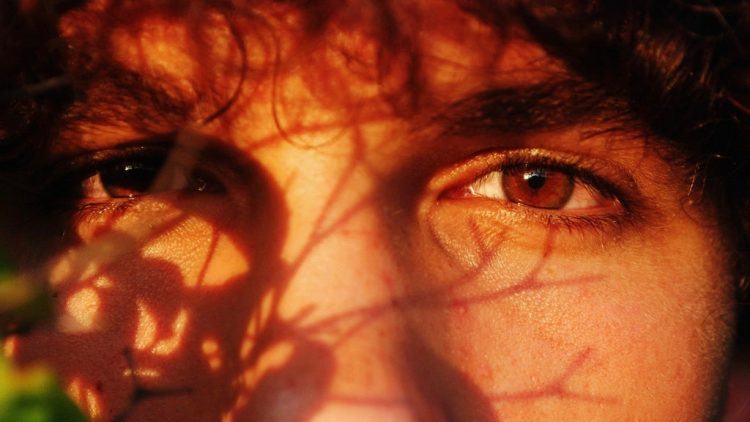
Photo credit: OUCHcharley.
KC never set out to build a healthcare startup. An avid reader and cricket fan, K. Chandrasekhar – known to colleagues as KC – was working in the semiconductor industry years ago when he visited a hospital and discovered how big a problem preventable blindness was: around the world, 80 percent of blindness is preventable.
Blindness takes a toll on families too, he explains. The affected individual’s responsibilities may include earning for the household, taking care of elderly parents, and looking after children.
In 2007, India had 12,000 opthamologists. The ratio of ophthalmologists to people in urban areas is 1:25,000, while the ratio in rural areas is 1:219,000. (In comparison, the US’ ratio was 1:13,000 in 2010.)
KC, an IIM-Calcutta alum, says the number of eye doctors in India now is closer to 20,000, but they still can’t cater to everyone who needs eye care. That’s where he thinks technology can help, especially when a majority of blindness cases in the country – 75 percent, or over 11 million in 2007 – are preventable if causes like cataracts or glaucoma are caught early.
See: Meet the doctor turned inventor who wants to make India’s healthcare accessible
A solution
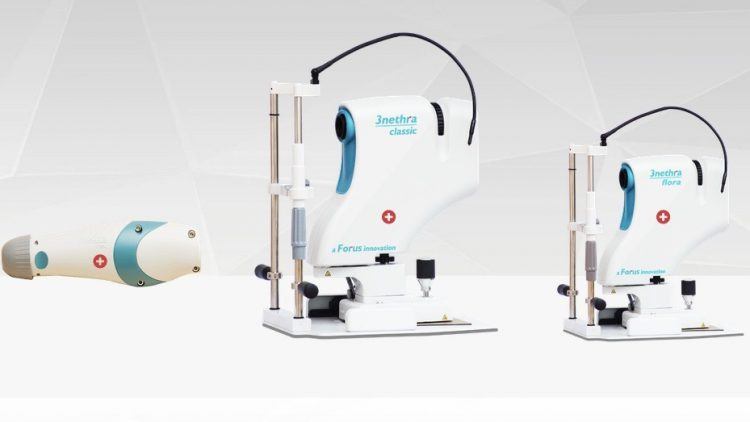
(From left to right) Forus Health’s devices 3Nethra neo, 3Nethra classic, and 3Nethra flora. Photo credit: Forus Health.
In 2009, KC and Shyam Vasudev began work on healthtech hardware startup Forus Health. The Bangalore-based company has four products that range from US$4,000 to US$50,000. The 3Nethra classic is a small, portable digital imaging device. It’ll take, store, and transmit pictures of the front and back of the human eye that help carry out a routine eye exam. It can detect problems like cataracts, glaucoma, diabetic retinas, problems with the cornea, and refractive errors – all contributors to blindness that can be treated if caught early. Unlike other eye exams, the 3Nethra classic does not require pupil dilatation.
The 3Nethra Flora is a non-contact eye scanner that works with pupil dilation. It takes more in-depth pictures, including the layout of blood and lymph vessels in the eye.
Detection of eye issues in children, especially younger children who can’t always communicate whether a lens prescription is correct, can be difficult. For younger or non-cooperative patients, Forus Health has the 3Nethra Kiddo, which helps detect refractive errors in eye patients. Refractive errors like nearsightedness or farsightedness occur when the eye is misshapen, causing light to bend differently around the eye. The 3Nethra Neo takes pictures of infant retinas to help diagnose and monitor diseases and disorders.
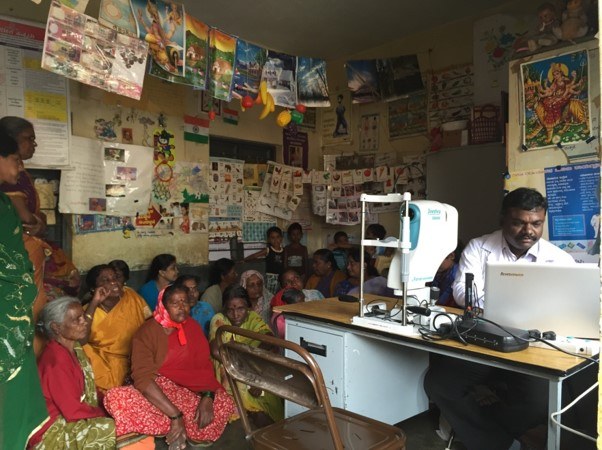
The 3Nethra classic at work. Photo credit: Forus Health.
Forus Health’s devices have been installed in nearly 1,400 places in 26 countries, including the US and countries in Europe and Asia. In April 2012, the startup raised US$5 million in series A funding from Accel Partners and IDG Ventures. Two years later, it bagged US$8.2 million in series B funding from Asian Health Fund, Accel Partners, and IDG Ventures.
Tackling prevention





Stay updated on the go with our mobile app.
Get latest insights with smoother, more personalized experience through TIA mobile app.








📅 Upcoming Events
22 October 2026
Payoneer x CSPN Summit 2026