- Premium Content It takes our newsroom weeks - if not months - to investigate and produce stories for our premium content. You can’t find them anywhere else.
 Derryn Wong · · 4 min read
High car costs give Singapore a robotaxi edge: Waymo founder
Widespread adoption of autonomous vehicles (AVs) is coming to Singapore, at least according to Sebastian Thrun. The self-driving car pioneer says the tech would take off in Singapore faster than even San Francisco because it makes more financial sense for the city-state’s market.
“Once the economics of AVs beat car ownership – and that’s going to happen in Singapore before San Francisco – we are going to see a massive landslide in which the population will just accept self-driving cars,” the founder of AV heavyweight Waymo tells The Business Times.
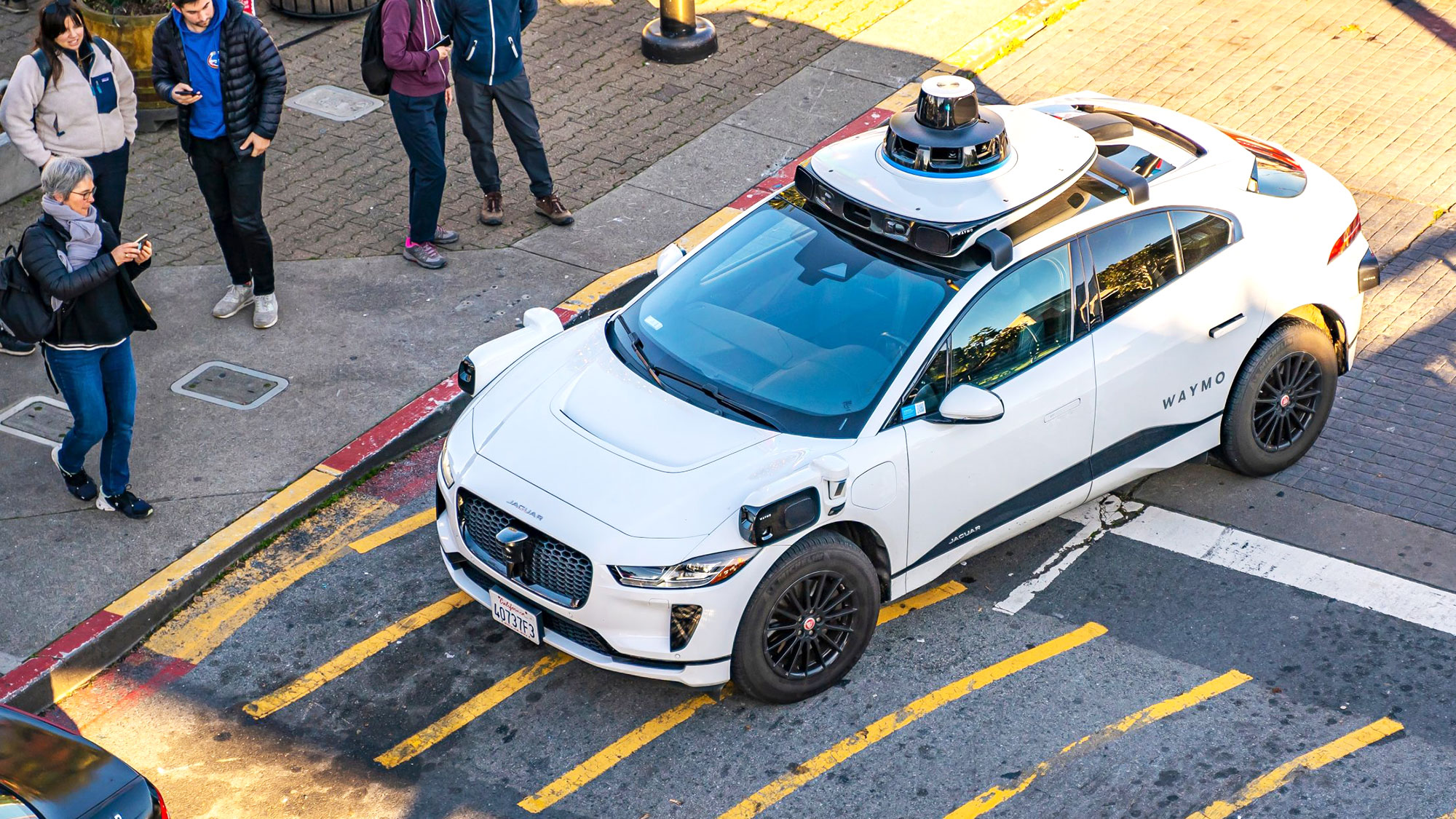
A Waymo robotaxi in San Francisco / Photo credit: Iv-olga / Shutterstock
Thrun is a leading figure in AV research with expertise in AI, robotics, and air taxis. He is also an adjunct professor at Stanford University.
The German-American leads Sage Labs, a San Francisco-based company specializing in agentic AI and ecommerce. In 2005, he helped Stanford win the US Defense Advanced Research Projects Agency Grand Challenge for AVs, now considered a major watershed in the technology.
He also led Google’s Project Chauffeur in 2009, which was spun off and renamed Waymo in 2016. The American AV company announced its entry into Singapore in September and plans to offer ride-hailing services in the city-state by 2028.
AV technology is now at the point where economics are the main factor rather than safety or other concerns, says Thrun. He believes that safety is no longer an issue for the sector, with Waymo’s data showing that its AVs are 17x safer than human drivers.
If implemented properly, AVs offer the benefits of private vehicles in addressing the last-mile problem – the most expensive and most complex stage of moving goods or people – but matched with the costs of public transport.
“With self-driving cars, you can solve all this with potentially the economics of mass transit. So it’s the best of all worlds,” he notes.
Self-driving cars, lah
AVs could be particularly beneficial to Singapore, with its small land area but high demands for transport.
Its well-maintained road network means replicating the system used in American cities is viable. Self-driving cars would also be able to reduce the need for parking spaces.
“[A car is] super expensive in Singapore, but it’s parked all the time, whereas a self-driving car not only adds a safety level but also flexibility. Eventually, it would keep the city greener because it’ll waste fewer resources parked somewhere,” Thrun says.
See also: ComfortDelGro’s quiet tech play and why it’s not sweating GrabCab
Singapore has run AV test beds since 2017. Grab and ComfortDelGro are currently running test beds with passengers in Punggol, although these are self-driving shuttles that run on fixed routes rather than point-to-point robotaxis.
Rapid maturation
Stay ahead in Asia’s tech landscape
This is premium content. Subscribe to read the full story.
Sebastian Thrun discusses why Singapore’s car costs could make it the first big robotaxi market – and what that means for Grab, Uber, and Didi.
We know this is not ideal. ⌛ Sign up in 20 seconds. Cancel anytime.
Our subscriber community includes professionals from these companies:





Stay updated on the go with our mobile app.
Get latest insights with smoother, more personalized experience through TIA mobile app.